PlacesMünchen
Renting storage for the gap between two Munich flats
All year
Almost every move in this city produces a gap — one lease ends on the last of the month and the next starts weeks later. The three ways to store things through it, what access really means once your belongings are in a warehouse, the terms that quietly extend a one-month booking, and the weeks when everything is taken.
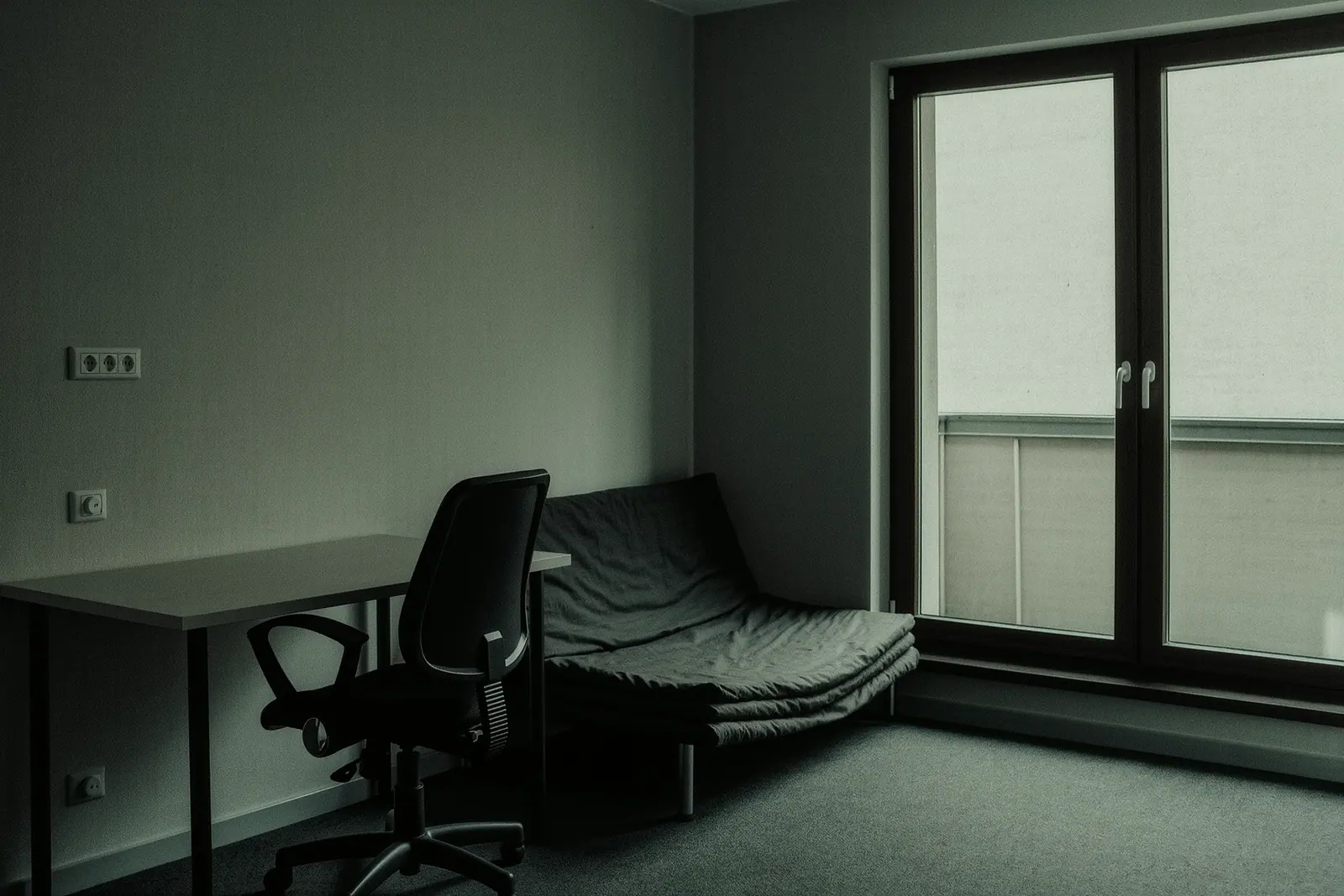
Tenancies in this city end and begin on the first of the month, and the two dates you actually get are rarely the same first. A flat that ends on the last of March and one that starts on the first of May leaves a household in boxes for four weeks. This is such a normal situation that an entire industry exists to absorb it.
The industry is straightforward. What catches people is the terms, not the shelves.
Three products for one problem
| Self-storage unit | Container storage | Private room or garage | |
|---|---|---|---|
| You get | A lockable unit you walk into | Space in a warehouse, no access | Whatever was agreed |
| Access | Usually daily, often round the clock | By appointment, usually charged | By arrangement |
| Loading | You do it, twice | Loaded once at the flat | You do it |
| Cost per month | Highest | Lower for the same volume | Lowest, most variable |
| Insurance | Compulsory, or proof required | Included or offered | Usually none |
| Suits | Gaps of weeks, things you need | Long gaps, furniture | Small volumes, short gaps |
The honest ranking for a normal four-to-eight week gap: self-storage if you will need anything at all, container storage if you genuinely will not, and a private arrangement only for a few boxes and only with somebody you would trust with the contents, because there is no cover and no recourse.
The terms that turn one month into two
Three clauses do most of the damage.
- Minimum term plus notice. A one-month minimum with a two-week or one-month notice period means a four-week need becomes a six or eight-week bill. Ask for both numbers in the same sentence.
- The introductory rate. The advertised price is frequently a first-month or first-two-month offer. Ask what the standing rate is, because a gap of four weeks has a habit of becoming three months when a purchase or a renovation slips.
- Compulsory insurance. Most operators require cover and sell their own. Check whether your household contents policy already extends to goods in storage — many do, some only with notification — and what proof the operator will accept.
Beyond that, look at the deposit, whether the unit is billed monthly in advance, and what happens if you leave mid-month. Pro-rata refunds are not universal.
Access, which is the whole difference
Round-the-clock access appears on nearly every listing and means different things. The questions that matter:
- Which floor is the unit on, is there a goods lift, and how big is it.
- How far is it from the vehicle to the door. A hundred metres of corridor with a trolley adds an hour to a van load.
- Can a van stop at the entrance, or is it a shared yard that fills up on Saturdays.
- Are trolleys and pallet trucks provided, and are any of them free at eight on the last Saturday of the month, when everybody in the building is moving.
- Do access hours match office hours? If a card stops working at nine at night, is there anyone to call.
Where to put it, geographically
Location drives the price more than anything else, and Munich has a steep gradient from the centre outwards. A unit inside the ring costs a great deal more than the same unit near a motorway junction on the northern or eastern edge, and for a gap of a month or two the saving comfortably exceeds the cost of the extra journeys.
The exception is if you will visit the unit repeatedly — a small business storing stock, or somebody living around a renovation. Then a site near a tram or underground stop earns its premium, because those trips happen without a van.
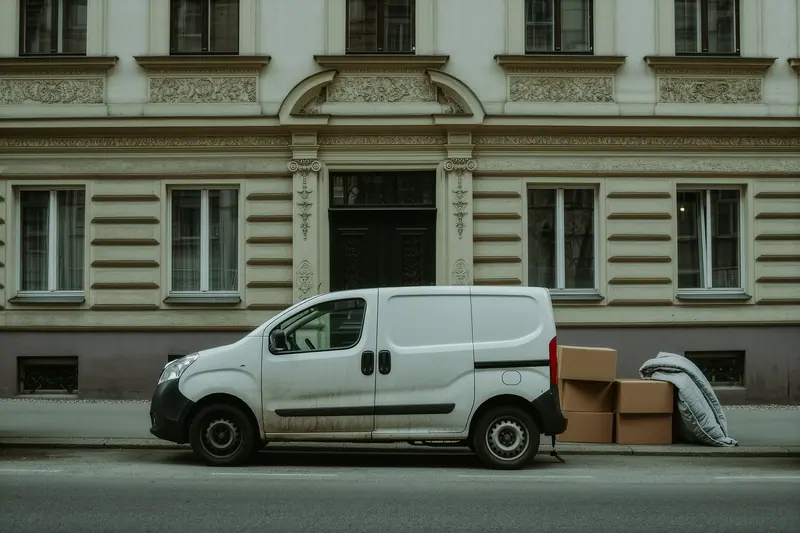
Old buildings add their own constraint at the flat end. Narrow staircases in the Jugendstil stock, no lift above the third floor, and courtyard entrances a box van cannot enter are all normal in the older districts, and they are why a move takes six hours rather than three. Measure the turn in the staircase before you commit to keeping the wardrobe.
Packing for storage rather than for a move
Different job, different rules.
- Uniform boxes, filled to the top so they stack without collapsing. Half-full boxes crush under the ones above them.
- Nothing directly on the floor. A pallet, battens, or at minimum a sheet of plastic under everything.
- Mattresses upright and covered, never flat under a stack.
- Label two faces of every box, and keep a list. You will want one specific thing and you will not remember which box it is in.
- A gangway down the middle in anything larger than a few square metres. A solid wall of boxes means unloading everything to reach anything.
- Documents and electronics last, at the front.
The Munich calendar
The last three days of any month are the worst time to arrange anything involving a van, a unit or two people to carry things. The end of September is worse again, because the academic year begins and several thousand people move into the city in the same fortnight. The festival fortnight and the big fair weeks squeeze the labour and the vehicles rather than the units, but the effect on your Saturday is identical.
Book a week or two ahead, start the unit from the middle of the month rather than the end if the rate allows, and load on a weekday if you possibly can.
If the gap is long enough that you need somewhere to live as well as somewhere to put things, the two markets behave completely differently. A furnished let has the registration question attached to it, while a serviced apartment is simpler and, in the wrong weeks, very much more expensive. And if you work from home and your desk is currently in a box on the eastern edge of the city, a day pass beats a fortnight of cafés; the hourly space piece covers what that market looks like here.
What to check before you book
- Confirm the minimum term and the notice period to leave. A month in, a month out, is common and turns four weeks into eight.
- Ask whether the advertised rate is an introductory price and what it becomes afterwards.
- Check whether insurance is compulsory, whether you can use your own contents cover, and what proof they want.
- Ask what floor the unit is on, whether there is a goods lift, and how far it is from where a van can stop.
- Establish access hours and whether they differ from office hours. Round-the-clock access is common but not universal.
- Get the prohibited items list before you pack. Fuel, gas bottles, loose batteries and food are typically excluded.
- Measure before you book. A unit two square metres too small costs more to fix than one two square metres too large.
Questions people actually ask
- What size storage unit do I need?
As a rough guide, the contents of a one-room flat fit into a very small unit, a two-room flat needs something in the region of five to seven square metres, and a family flat needs ten or more. Height matters as much as floor area, because you stack. If you are between two sizes take the larger one: repacking a full unit because the last three boxes will not fit is a genuinely bad afternoon.
- How much does storage cost in Munich?
It varies mainly by location rather than by provider, and the spread within the city is wide. Units near the centre carry a substantial premium over the same space near the ring road or out towards the motorway junctions, and over three months the difference usually exceeds the cost of the extra journeys. Expect introductory rates on the first month or two that step up afterwards.
- What is container storage and when is it better?
Your belongings are loaded into a container at the flat, taken to a warehouse and stored there. It is normally cheaper per month than self-storage of the same volume and it removes two loading operations. The trade-off is access: you cannot walk in and fetch a box, and retrieving anything means an appointment and usually a fee. It suits long gaps and things you definitely will not need.
- When is storage hardest to find in Munich?
At the end of every month, because tenancies here overwhelmingly end and begin on the first, and especially at the end of September when the academic year starts. The festival fortnight and the large trade fair weeks add a second squeeze, on vans and on labour more than on the units themselves. Booking a week or two ahead is usually enough; the last three days of the month are not.
- Can I store anything I like?
No. Every operator publishes a prohibited list and it typically covers fuel, gas bottles, paint and solvents, loose batteries, food, plants, anything living, and anything hazardous. Some also exclude items above a stated value unless they are declared. Read it before you pack rather than at the gate with a loaded van, and declare anything unusual.