On the waterMünchen
What the wind does to a rented boat on a large alpine lake
Apr–Oct
The lakes south of Munich are calm at nine and lively at three, and the boats you can hire on them are the least powerful boats on the water. How the daily thermal works, what the warm south wind and the afternoon storms do, how the shore warning beacons work, and the turn-back rule that keeps a good day good.

On a hot July morning the biggest lake near Munich looks like a floor. By three in the afternoon it has a short, steep, uncomfortable chop running down its length, and the electric launch that took forty minutes to reach the far jetty is taking an hour and a half to come back.
Nothing has gone wrong. That is simply what these lakes do, and the boats you can hire on them are, by regulation, the least powerful boats on the water.
The daily cycle
The mechanism is straightforward. The sun heats the slopes around the lake, air rises off them, and cooler air moves in over the water to replace it. On a clear warm day this builds through late morning, peaks in the afternoon, and drops away in the evening. On an overcast day it barely happens at all.
| Time | Typical state | What a hire boat feels | Sensible plan |
|---|---|---|---|
| Sunrise to 10:00 | Glassy, mirror water | Effortless, full speed | The best hours of the day |
| 10:00 to 12:00 | First ripples, direction settling | Slight, noticeable on a board | Head out now, not later |
| 12:00 to 16:00 | Steady breeze, short chop | Slow into it, wet, battery draining | Be on the way back |
| 16:00 to 19:00 | Easing, wave dying last | Improving, still lumpy | Fine for a short evening trip |
| After sunset | Calm, often cold | Easy but dark early in autumn | Only if you know the shore |
The direction is worth asking about at the jetty. Each of these lakes has a prevailing afternoon direction shaped by the valley it sits in, and the local operators know it precisely. Knowing which shore will be the sheltered one at four in the afternoon changes where you should go at eleven in the morning.
The two disruptions
Two things override the daily pattern.
The warm south wind off the Alps is the first. It brings dry, clear air, and the giveaway is visible from the city: when the mountains look sharp and close from a bridge in Munich, that air is in place. On the lakes it can be strong and notably gusty rather than steady, and it frequently precedes a change in the weather. Exceptional visibility is a reason to check the forecast, not a reason to relax.
The afternoon thunderstorm is the second, and it is the dangerous one. Storms build over the main range in the heat of a summer day and drift north over the foothills and the lakes. The important detail is that the squall arrives before the rain — a gust front well ahead of the cloud, which can take a lake from ripples to whitecaps in a few minutes. If you can see towering cloud over the mountains at lunchtime, plan a short afternoon.
The beacons, and how to use them
The Bavarian lakes carry a public storm warning system: amber beacons on masts around the shore, visible from the water, flashing at two different rates. The slower rate is a strong wind warning, issued in advance of conditions that will be difficult for small craft. The faster rate is a storm warning, issued closer to the event and meaning get off the water now.
Two things to do about it. Ask the hire operator to point out the nearest beacon from the jetty and confirm which flash rate is which, because reading it correctly is worth more than any other piece of advice here. And decide, before you leave, what you will do if it starts while you are two kilometres out.
The answer is almost always the same: go to the nearest shore, not the shore you came from. A hire boat on a lee shore in a squall is a difficult situation; a hire boat already tied up on the wrong side of the lake is an inconvenience and a taxi.
What your particular boat can actually do
The hire fleet on these lakes is deliberately low-powered, which is a good thing for the lakes and a limitation for you.
An electric launch loses a great deal of speed over the ground into a headwind and drains its battery faster doing it. Assume the return leg into wind costs at least twice what the outward leg cost, in both time and charge.
A rowing boat is workable in a breeze if the crew is strong and hopeless if not, and it has the additional problem of a high bow that catches wind at exactly the wrong moment.
A pedalo is the least capable thing on the water. It has almost no drive and a lot of windage, and it should not be more than a few hundred metres from the jetty on a day with any breeze in it.
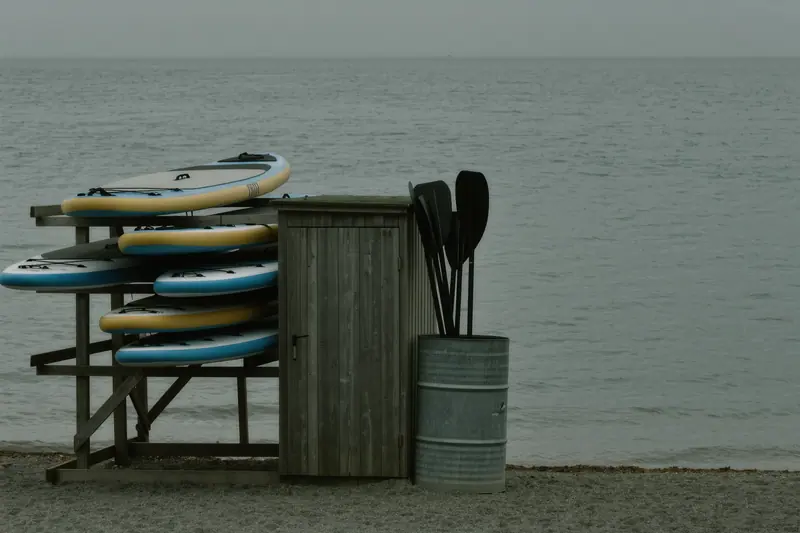
A paddleboard is a sail with a person on it. The rules for that are in paddleboard rental on the lakes.
The turn-back rule
The single habit that keeps hire boating on these lakes safe and pleasant: turn back at half your remaining charge, not at half your remaining time.
Time is symmetrical and wind is not. A three-hour hire spent going out for ninety minutes will not come back in ninety, because the second half is into the breeze that built while you were enjoying the first half. Charge, distance and effort all behave the same way.
Everything else follows from that. Go out into the wind and come back with it, stay within reach of a shore you could land on, and treat the afternoon as shorter than the morning even though the clock disagrees. The rest of the practical detail for the biggest of these lakes is in boat rental on the Starnberger See, and it is worth reading before your first hire rather than after it.
What to check before you book
- Ask the operator to point out the nearest warning beacon from the jetty and to tell you what each flash rate means.
- Get the forecast for the afternoon, not for the morning, before you take a boat out for a whole day.
- Agree with the operator what you should do if the beacons start while you are two kilometres out.
- Ask what the weather clause in the hire contract says about a cancelled or shortened session.
- On an electric boat, ask how much charge remains and treat headwind as doubling the consumption on the way back.
- Check there is a working means of calling for help aboard, and that your phone is somewhere dry.
Questions people actually ask
- When is the water calmest on the big lakes?
From first light until somewhere between ten and midday, depending on how warm the day becomes. The thermal circulation needs sun on the slopes to get going, so an early start gives you glassy water and an easy paddle or cruise. By mid-afternoon on a hot day there is a steady breeze and a short chop, and it usually dies away again in the evening.
- What are the flashing lights around the shore?
A public storm warning system used on the Bavarian lakes. Amber beacons on masts around the shore flash at one rate for a strong wind warning and at a faster rate for a storm warning, giving you notice before the weather arrives. Learn which is which from the hire operator at handover, because reading them correctly is the most useful safety skill on these waters.
- Can an electric hire boat cope with a windy afternoon?
Up to a point, and that point comes sooner than people expect. These boats are deliberately low-powered, they sit high on the water, and a headwind with a short chop cuts their speed over the ground dramatically while increasing the drain on the battery. A return leg into a fresh breeze can take two or three times as long as the outward one.
- What is the warm south wind everyone mentions?
A downslope wind off the Alps that brings warm, dry, unusually clear air, so the mountains look close enough to touch from the city. On the lakes it can be strong and gusty rather than steady, and it often arrives ahead of a change in the weather. Treat exceptional visibility from Munich as a reason to check the forecast before you book a boat.