GearMünchen
Hiring climbing and via ferrata kit south of Munich
Jun–Oct
The limestone above the lakes and the Karwendel walls put several hundred protected routes within ninety minutes of the city, and the kit for them is straightforward to hire. What a set contains, the weight range printed on the label that people ignore, what the halls in Munich lend, and where hiring stops making sense.
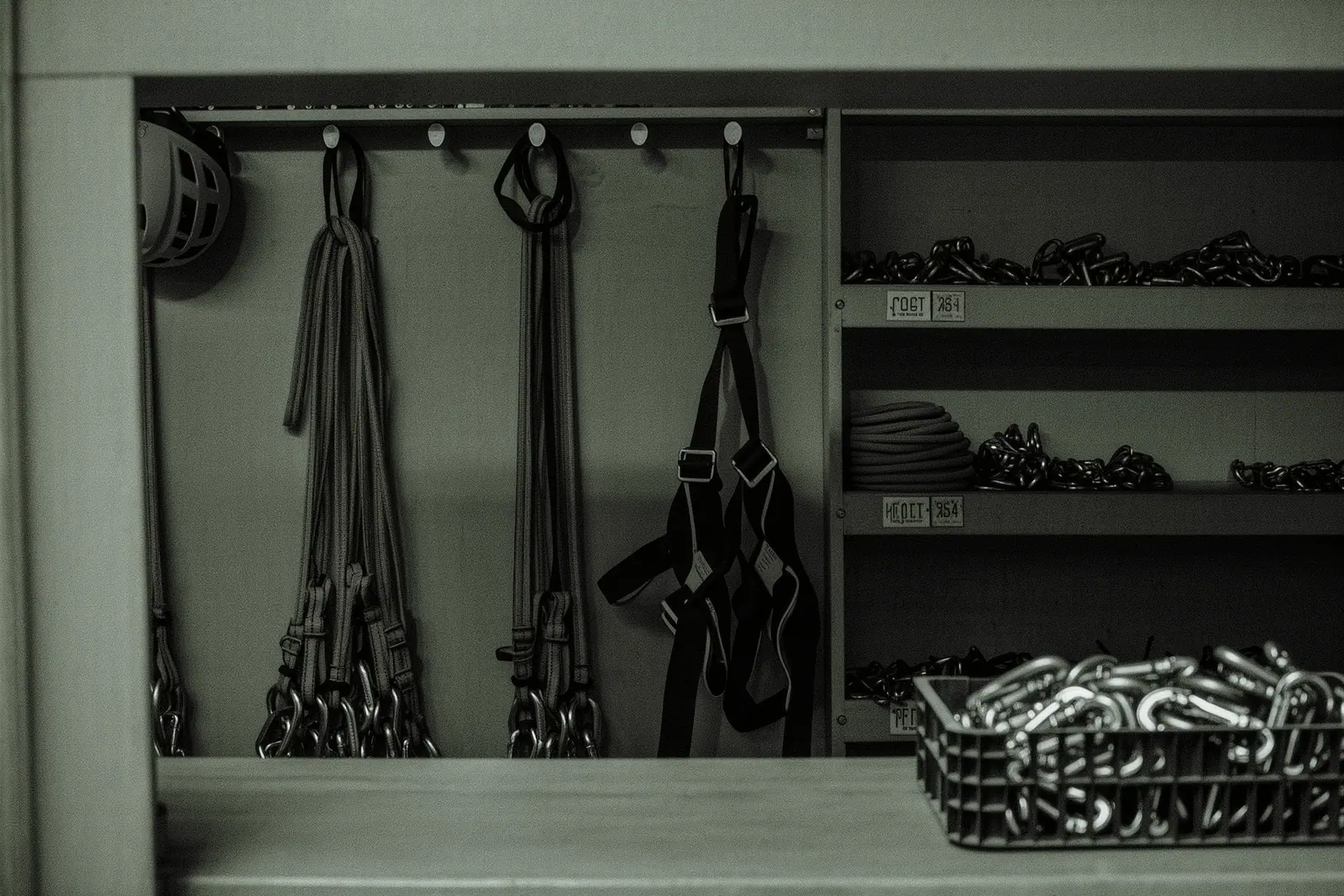
The wall of limestone that starts an hour south of Munich has been threaded with steel cable for over a century, and the result is a very large number of protected routes within a comfortable day of the city — above the lakes at Kochel and Walchensee, through the Wetterstein behind Garmisch-Partenkirchen, and along the Karwendel. It is close enough that people drive down after work in July.
The equipment for it is simple, cheap to hire, and one component has a number printed on it that a surprising share of users have never read.
What you actually need
For a protected route: a harness, a lanyard set with two arms and an energy absorber between them, and a helmet. Nothing else. You are clipping to a fixed cable, so there is no rope work and no hardware to place. Gloves are not required and everybody who has done a full day on wire wishes they had brought them.
| Item | Hire or own | What to check on a hire |
|---|---|---|
| Harness | Own it — cheap, personal | Fitted over your actual clothing, leg loops snug |
| Lanyard set | Hire is fine | Weight range on the label, inspection date, model age |
| Helmet | Hire is fine | Adjuster works, no cracks, sits level |
| Gloves | Own them | Fingerless is the usual choice |
| Rope and hardware | Not needed on protected routes | Only if the route has a climbed section |
| Shoes | Own them | Stiff approach shoes are fine; boots on longer routes |
The lanyard set is where attention belongs. The absorber is designed to soak up a fall within a stated range of user weights, and outside that range it does not do what the label says. Read the range. Include the rucksack — three litres of water and a jacket move the number more than people expect, and a light teenager sits at the other end of the same problem.
Two further things about a hired set: ask when it was last inspected, and ask whether the model has been subject to a manufacturer recall. Both sound paranoid. Both are ordinary questions to a shop that rents this equipment regularly, and a shop that cannot answer either one is telling you something.
Where the hire happens
Three sorts of counter, and they suit different trips.
- Outdoor shops in Munich. The widest choice, unhurried fitting, and you collect the evening before. Best for a first time, because somebody will spend fifteen minutes showing you how the set works on a demonstration cable.
- Valley shops in the mountain towns. Convenient if you are already going that way, thinner on stock in August, and a shorter conversation.
- Indoor climbing halls. Shoes and harnesses at the desk, and some of them have a practice cable so you can learn to clip before you are twenty metres above a scree slope. This is the sensible order of operations.
Reading the difficulty, and the local grading
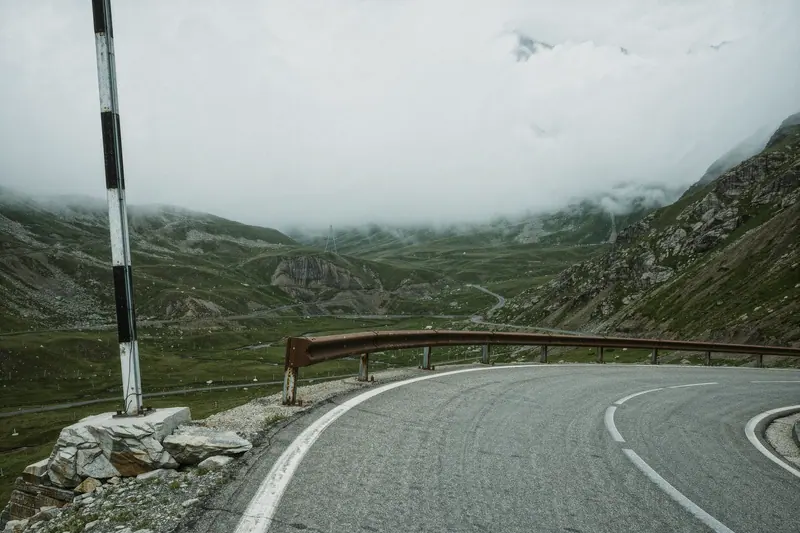
Routes in the eastern Alps are graded on a lettered scale that runs from easy protected paths to sustained overhanging cable. The letters are widely used and reasonably consistent, and they describe the physical difficulty of the route rather than how exposed or how long it is.
Those last two are what actually catch people out. A moderate route that is four hours long and finishes on a ridge at 2,000 metres is a different day from a short, steep one an hour above a car park, whatever the letter says. Read the length, the ascent, the descent — which is frequently on foot down a loose gully — and the escape options before the grade.
Rock in this range is limestone: polished on popular routes, greasy when damp, and prone to sending down whatever the party above kicks loose. That is the helmet argument, and it applies on the easy routes as much as the hard ones.
The season, and the afternoon problem
June to October in general, with real variation. North-facing routes and anything above roughly 1,800 metres in the Karwendel hold snow in gullies into early summer and get it back from late autumn. Lower routes above the lakes work from spring.
The daily pattern in high summer is the thing to plan around. Heat builds through the morning and thunderstorms form over these mountains in the afternoon with very little warning from the valley. A steel cable running up a ridge is the worst place to be in a storm, and there is often no quick way off. The local habit is not caution for its own sake: start at first light, be off the exposed section by early afternoon, and treat a forecast that mentions afternoon storms as a shorter route rather than a later start.
What hiring cannot do
A lanyard set converts a fall on a protected route from fatal to survivable. It does not make one pleasant, and a fall on a via ferrata frequently means sliding down cable to the last anchor, which is a serious injury even when the equipment works exactly as designed. The set is a last resort, not a safety net you plan around.
So the equipment is the small part. Route choice, an honest read of the party’s weakest member, a turnaround time and the ability to reverse a section are the rest, and none of them come in the bag. If it is your first route, go with somebody who has done several, or book a guided day — the hire shops in the city will point you at the practice cable, which is the cheapest hour you can spend before a first attempt.
The same principle runs through the winter version of this, where the consequences arrive faster and the equipment does even less on its own; the avalanche kit piece is the counterpart to this one. If the plan is two routes over a weekend rather than a long day trip, staying up there is both cheaper and safer than driving back at eleven at night — see the alpine cabin piece for how those bookings work and how far ahead they go.
What to check before you book
- Read the user weight range printed on the lanyard set and check that you, plus your rucksack, sit inside it.
- Look for the inspection date or check mark on the set and ask when it was last examined and how the shop logs it.
- Ask whether the set is a current model and whether it has been affected by any manufacturer recall. Shops that rent these keep the records.
- Have the harness fitted over the clothes you will actually wear, and tighten the leg loops properly rather than approximately.
- Take a helmet even if the route looks easy. Most helmet use on protected routes is about what other parties dislodge above you.
- Check whether gloves are included; hands come off worse than anything else on a steel cable.
- Confirm the return window and whether a Sunday evening return is possible, because most of these trips end late on a Sunday.
Questions people actually ask
- What is in a via ferrata hire set?
A harness, a lanyard set with two arms and an energy absorber, and a helmet. Gloves are sometimes bundled and sometimes extra. That is the whole kit for a protected route — you are clipping to a fixed steel cable rather than placing your own protection, so no rope, no belay device and no hardware is needed unless the route has a section that is genuinely climbed.
- Why does the lanyard set have a weight range on it?
The energy absorber is engineered to dissipate the force of a fall within a stated range of user weights, and outside that range it does not behave as designed. Both ends matter: a light child and a heavy adult carrying a full pack can each fall outside the printed limits. The range is on the label, it varies by model, and it is worth reading rather than assuming.
- Should I hire or buy?
Hire for one or two days a year. Buy if you are doing this several times a season, because a set is not expensive against the cost of repeated hires and you then know its history. The harness is the item most worth owning outright: it is cheap, it is the one thing fitted to your body, and a rented harness always fits somebody else slightly better.
- Is climbing gear worth hiring for indoor use?
The halls in and around Munich lend or rent shoes and harnesses at the desk, so there is no reason to buy anything before you know you like it. Shoes are the exception worth acquiring early — rental shoes are stretched, soft and sized generously, and your own pair changes the experience more than any other single purchase.
- When does the via ferrata season run in the Bavarian Alps?
Roughly from June to October, later on lower routes and shorter on north faces and in the higher Karwendel, where snow lingers in gullies well into early summer and returns from late autumn. Midsummer afternoons bring thunderstorms; a steel cable on a ridge in a storm is a place nobody should be, and the standard local practice is to start early and be off the exposed sections by early afternoon.