GearMünchen
Touring kit or piste kit: what to hire for which day
Dec–Apr
Ski touring is close to a mass sport in this city, and the hire counter treats it as a specialist order. What separates a touring setup from a piste set and from a freeride ski, what comes in the bag and what does not, and how to choose between them for the pre-Alpine valleys an hour south.
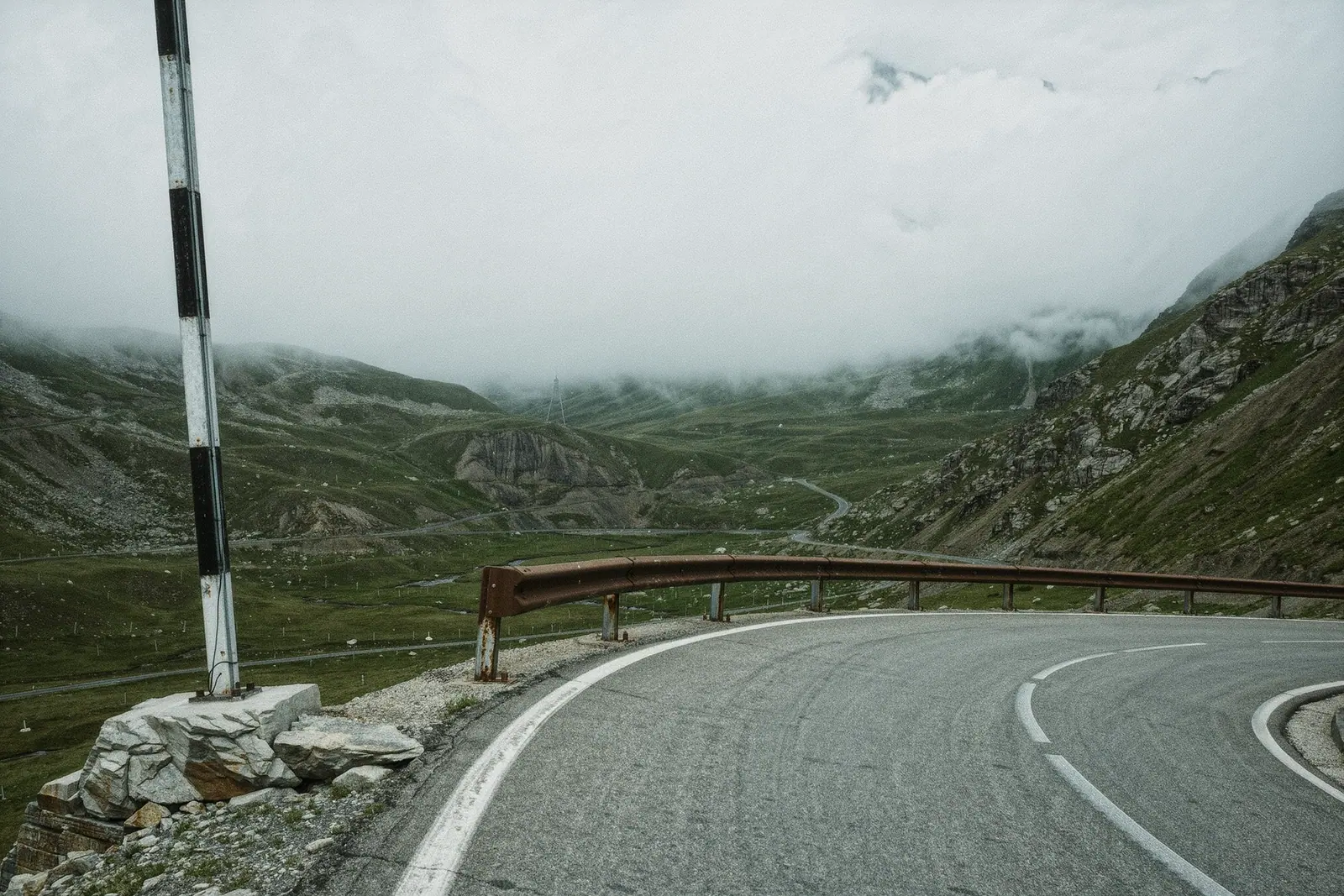
Ski touring is not a fringe activity in Munich. On a settled Saturday in February the car parks in the Isar valley, at the Spitzingsee and along the roads into the Ammergau Alps fill before nine with people who are walking up rather than buying a lift pass, and the shops in the city that rent this equipment know exactly what they are being asked for.
That is the useful part. It also means touring kit is hired as a set, ordered in advance, and priced very differently from the skis in the front of the shop.
Three setups, and what each one is for
| Piste set | Freeride set | Touring set | |
|---|---|---|---|
| Weight per ski | Heaviest | Heavy | Roughly half |
| Binding | Fixed heel | Fixed or walk mode | Free heel, usually pins |
| Boot | Stiff, no walk mode | Stiff, sometimes walk mode | Walk mode, lighter, rubber sole |
| Skins | No | Only with a walk binding | Included, cut to the ski |
| Best at | Groomed runs, hard snow | Descending off-piste | Going uphill |
| Worst at | Anything soft or uphill | Long ascents | Icy pistes at speed |
| Typical deposit | Low hundreds | Higher | Higher again |
The single sentence version: a touring ski is roughly half the weight of a piste ski and gives most of that back on the way down. If your day is mostly uphill, that trade is obviously right. If your day is four lift-served descents with one short skin at lunchtime, it is obviously wrong.
The setup that gets hired for the wrong reason is the freeride ski with a walk binding. It sounds like the answer to both questions. In practice it is a heavy ski to carry uphill and an over-specified one for an ordinary tour above Lenggries, and it costs more than either of the alternatives.
What comes in a touring hire
A proper touring package is skis, bindings, skins cut to those skis, boots and adjustable poles. Ask about each of the following separately, because each of them is missing from somebody’s rental somewhere:
- Skins that fit the ski in your hands. They are trimmed to a specific ski and a mismatch means either exposed base or overhang on the edges. Ask when the glue was last refreshed; tired glue on a cold morning is a genuinely miserable problem.
- Ski crampons. Metal claws that clip into the binding for firm spring snow and icy tracks. Sized to the ski width, usually an add-on, usually forgotten, and the thing you will want at seven in the morning on a frozen forest road.
- Boots with a working walk mode. Check the lever moves and locks. A walk mode that will not lock into ski mode is a long descent.
- A demonstration of the mode change. Do it yourself twice in the shop, with gloves on if you can. Pin bindings are simple once and awkward the first time, in snow, with a group waiting.
- The safety set, if it is bundled. Transceiver, probe and shovel are sometimes in the package price and sometimes a separate line.

The boot is still the bottleneck
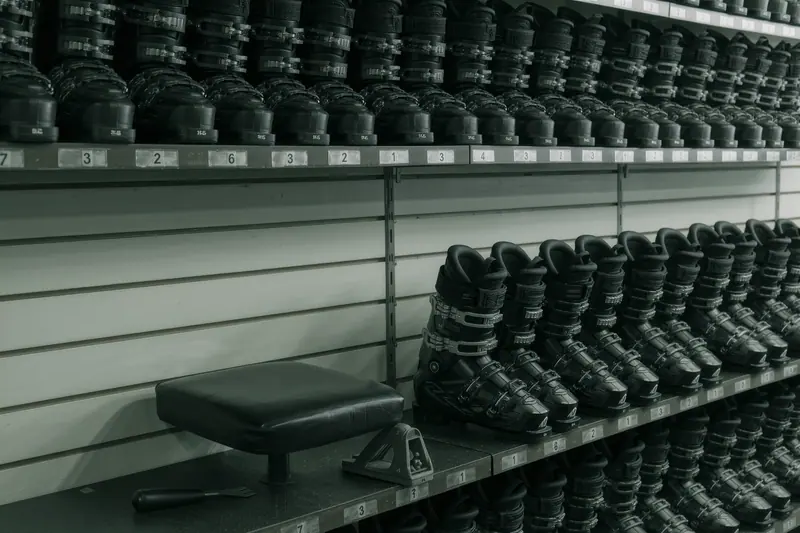
Touring boots have to do two contradictory things: walk for three hours without destroying your shins, and hold up on a descent. Rental ranges are narrow, the sizes go early, and a touring boot that is slightly too big is worse than a piste boot that is slightly too big, because you will be pushing against it for hours rather than minutes.
Book boots first. Everything in the boot fitting piece applies here with more force, plus one addition: walk in walk mode, on the shop floor, up a step if there is one. The heel should stay put when the cuff is released.
Choosing for the ground south of the city
The mountains within reach of Munich are not high. That shapes the choice more than any equipment argument.
- December and January, low snow line, cold, short days. Tours in the Isar valley and the Mangfall hills work when they work, and turn to grass and mud in a warm week. Hire late and hire flexibly.
- February, the reliable month, and the busiest. Everything gets booked out in the late-winter school holiday week.
- March and April, the best time to learn. Longer daylight, more settled snowpack in many conditions, and firm early-morning snow that softens through the morning — which is also when ski crampons stop being optional and when the turnaround time matters, because wet snow late in the day brings its own hazards.
Higher ground behind Garmisch-Partenkirchen and into the Karwendel extends the season by weeks. It also raises the seriousness of the terrain, which is where the equipment conversation stops being about weight.
The thing the hire counter cannot give you
Everything above is kit. Touring takes you into avalanche terrain, and no rental package changes that. A transceiver in a rucksack is worth very little without practice using it under time pressure, and route choice — the decision not to be on that slope at that hour — is the part that actually keeps people alive.
Equipment is not a substitute for training. If this is your first season, book a course, go with people who have done it, read the regional avalanche bulletin every day for a month before you use it in anger, and start on marked uphill routes at a ski area where the consequences of a bad decision are a tired walk rather than a burial. The avalanche kit piece sets out what the hire covers and, more usefully, what it does not.
For a first winter, the sober recommendation is to hire a piste set for the lift-served days as described in the day-trip piece, do the uphill practice on a marked route in the evening, and hire the touring package only for the day you have a competent partner and a bulletin you have actually read.
What to check before you book
- Confirm the hire includes skins cut to the ski you are given, and that they have been checked for glue this season.
- Ask whether the boots have a walk mode and whether they are compatible with the binding on the skis — pin bindings need a boot with the right fittings.
- Ask for ski crampons in the size that matches the ski width. They are frequently a separate item and frequently forgotten.
- Check whether the safety set — transceiver, probe, shovel — is included in the touring package or hired separately.
- Have the shop show you how to switch the binding between walk and ski mode, and do it yourself twice before you leave.
- Ask what the deposit is. Touring setups are light and expensive, and the hold is usually several times a piste hire.
Questions people actually ask
- Can I use a normal piste set for an easy tour?
For a short, gentle uphill on a firm track, some people manage with a heavy freeride setup and adhesive skins, but a fixed alpine binding gives you no heel lift and turns even a modest climb into hard work. If you are going uphill for more than a few hundred metres of ascent, hire the touring setup. The weight difference between a piste ski and a touring ski is roughly the same as carrying a full rucksack.
- What is the difference between a touring binding and a freeride binding?
A touring binding releases the heel so you can walk, and the lightest ones grip the boot on pins at the toe. A freeride binding is built to descend hard and may or may not have a walk function, at a significant weight penalty. Touring kit prioritises going up; freeride kit prioritises coming down; the honest question is which half of the day you care about.
- Do I need my own boots for a touring hire?
Not necessarily, but the boot matters more than in a piste hire because it has to work with the binding and be walkable for hours. Shops that rent touring setups almost always rent matching boots, and the sizes run out sooner than the ski sizes. Book the boots first and treat the ski as the easy part.
- When does the touring season run near Munich?
The pre-Alpine valleys south of the city carry enough snow for touring from roughly December to March in an average winter, and the higher ground behind Garmisch-Partenkirchen and in the Karwendel can hold into April and beyond. Spring is the friendlier half of the season for beginners: longer days, more settled snow, and softer surfaces in the afternoon.
- Is there anywhere to practise before a real tour?
Several Bavarian ski areas permit uphill travel on marked routes alongside the pistes at set times, which is the usual way people here learn to walk, switch modes and pace themselves without any avalanche exposure. Rules, permitted evenings and closing times differ by area and change from season to season, so check the current arrangements for the specific area before you go.