On the roadMünchen
One-way rental from Munich into Austria or Italy
All year
Dropping a hire car in Innsbruck, Salzburg or somewhere south of the Brenner is easy to book and easy to get wrong. The permitted-countries clause, what the drop fee is really paying for, three different toll systems in three hundred kilometres, and the camera fines that turn up in spring.
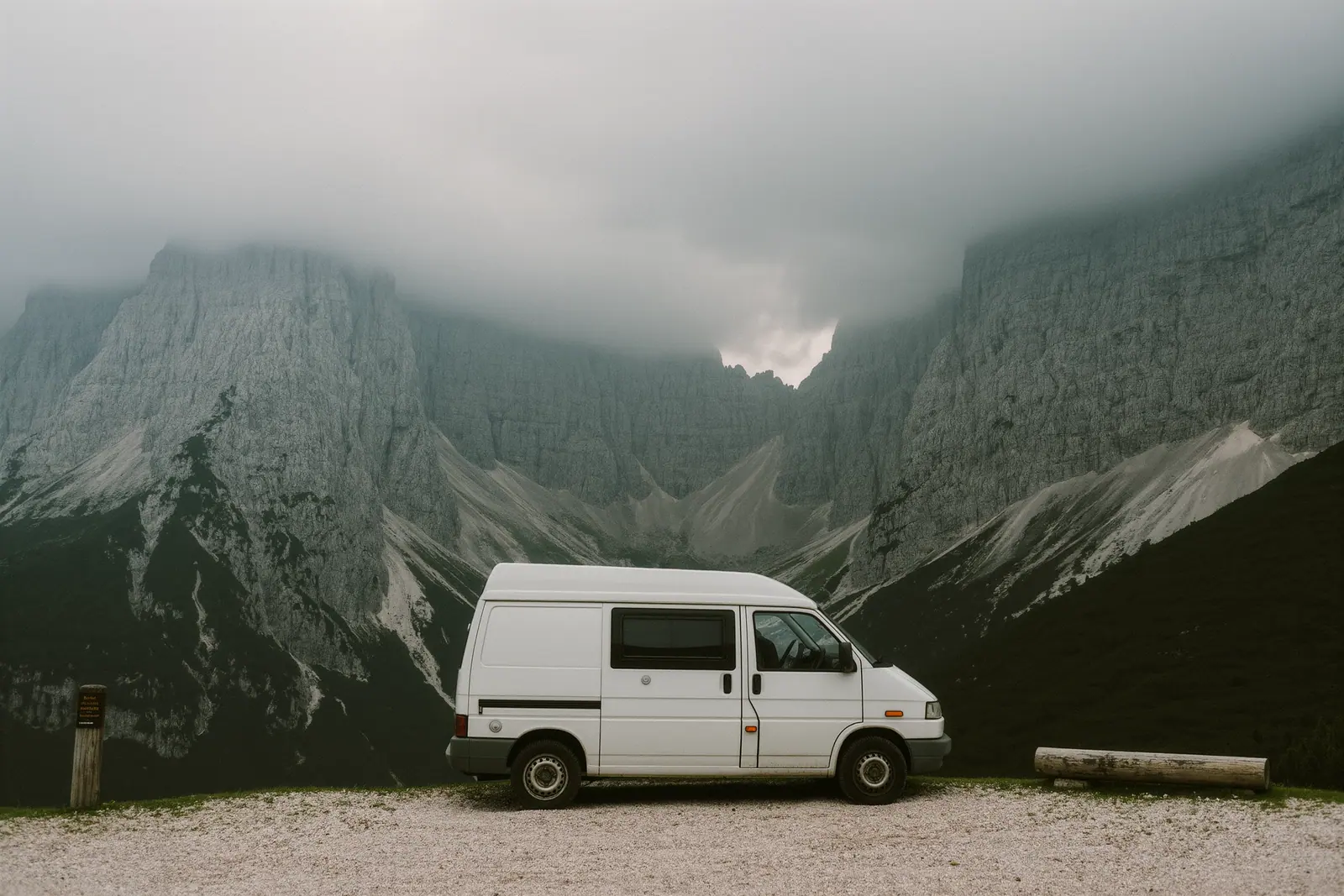
Munich is about ninety minutes from the Austrian border and roughly four hours from the far side of the Brenner, which makes the one-way rental an obvious idea. Drive down through the mountains, hand the car back in Innsbruck or Bolzano or Verona, come home on the train. It works well, and almost every problem with it is written on the contract before you leave.
The permitted-countries clause
Every German rental agreement carries a territorial clause, and it is not a formality. It lists the countries the vehicle may enter, and driving outside that list can void the insurance rather than merely annoy the company.
For a standard car, Austria and Italy are almost always included. The exceptions cluster in predictable places: high-value and performance cars are frequently barred from leaving the country at all, larger vans and box vans are often restricted, campervans sometimes have their own list, and some contracts treat a one-way drop abroad differently from a return trip through the same country. Rented motorbikes are their own case again, dealt with in motorbike rental for the alpine passes.
Get it in the written confirmation. A desk agent saying “of course, everyone does that” is not a permission you can produce four weeks later.
The drop fee, and why it varies so much
The one-way charge is not a penalty. It is the cost of moving the car back into a fleet that can rent it again, which is why the number tracks geography rather than distance.
| Drop location | Distance from Munich | Why the fee looks the way it does |
|---|---|---|
| Salzburg | ~150 km | Large local fleet, easy repositioning, usually the cheapest cross-border drop |
| Innsbruck | ~160 km | Busy airport fleet, moderate fee, seasonal variation |
| A Tyrolean valley town | 180–250 km | Small or no depot, high fee, sometimes refused |
| Bolzano or Verona | 300–450 km | Different country, different fleet, fee steps up sharply |
| Milan or Venice | 450–550 km | Airport fleets, high but predictable, good rail links home |
Two things follow. First, ask about the specific drop point rather than the country, because a city with an airport fleet can cost a fraction of a town sixty kilometres closer. Second, ask whether the fee is seasonal. Companies occasionally want cars moved south before the winter or north after it, and the fee in that direction can be small.
Three toll systems in one afternoon
German motorways are currently free for cars, which lulls people into not thinking about tolls at all.
At the Austrian border that changes. Austria requires a motorway pass for its network, available for short periods as well as annually, and several alpine sections and tunnels carry their own separate charges on top. Vehicles above 3.5 tonnes maximum authorised mass are outside that system altogether and use a different, distance-based arrangement — which matters for the larger campervans and box vans.
Italy runs a distance-based network with tickets and barriers. You take a ticket on entry and pay on exit, by card or cash, and the payment lanes are not always obvious at speed.
Ask the rental company one specific question: what is already on this vehicle for Austria, and from which date. Fleet cars often carry an annual arrangement, in which case you do nothing; if they do not, buying the pass is on you before you join the motorway, not afterwards.
The fines that arrive in spring
The single most common cross-border surprise from this route has nothing to do with tolls. Italian historic town centres operate camera-enforced restricted traffic zones, and satellite navigation will happily route you straight through one. The camera reads the plate, the authority traces it to the rental company months later, the company charges an administration fee to identify you, and the fine follows separately.
Practical defences: park outside the historic centre of any Italian town and walk in, treat any sign at the entrance to an old town as a prohibition until proven otherwise, and ask the rental company at booking what their handling charge is per notice. Austrian and Italian environmental zones and section enforcement on the motorways work on the same delayed timetable.

Season, and the one thing that makes this rental hard to get
Cross-border one-ways out of Munich are easy to book for most of the year and difficult in exactly the periods you would expect. The autumn festival fortnight absorbs the local fleet, and the winter school holidays absorb everything that can carry skis, in both directions. Add the summer changeover Saturdays, when the whole of northern Europe is driving through the Brenner corridor and the depots at the far end are already full of cars nobody has repositioned yet.
Book four to ten weeks ahead for a summer or holiday drop, and expect the fee to be quoted per date rather than as a fixed number.
One structural point that saves people money: the return journey. There is a direct rail route through the Brenner corridor and fast services from Salzburg and Innsbruck, so a one-way hire south combined with a train back is often cheaper and always less tiring than driving both ways. That also makes the alpine campervan trip look different, since a campervan has to come back to its own depot and a car does not.
If your route is entirely within Austria, look at whether an Austrian depot at the border is a better start. Collecting in Salzburg or Kufstein after an hour on the train removes the cross-border clause, the German one-way fee and most of the toll question in a single decision.
What to check before you book
- Get the list of permitted countries in the booking confirmation, not from a phone call. Verbal permission is worth nothing at the return desk.
- Ask what the one-way fee is for your exact drop location. It varies by city and sometimes by day of the week.
- Confirm whether the motorway charge for each country is already on the vehicle or is your responsibility from the border.
- Ask whether the insurance cover and the breakdown cover extend across every border on your route, and what the recovery arrangement is abroad.
- Check the administration charge the company adds to any traffic fine passed on to you, and how long they can pass it on for.
- If any part of the route is in winter, confirm the tyre specification and whether chains are aboard and permitted.
- Photograph the car at the drop location including the fuel gauge and the odometer, because you will not be there when it is checked.
Questions people actually ask
- Can I drive a Munich hire car into Austria and Italy?
Usually yes for ordinary categories, but only if those countries appear on the permitted list in your agreement. Restrictions are common on high-value cars, larger vans and some campervans, and a few contracts exclude particular countries entirely. Get the permission in the written booking rather than assuming that a European rental works everywhere in Europe.
- What does the one-way fee actually pay for?
Getting the car back. The fee reflects the cost and likelihood of repositioning the vehicle to a depot where it can be rented again, which is why dropping in a large city with its own fleet is far cheaper than dropping in a valley town. On some seasonal routes the fee is small or waived because the company wants cars moved in that direction anyway.
- How do the tolls work between Munich and Italy?
Three systems in one journey. German motorways are free for cars, Austria uses a time-based motorway pass plus separate charges on certain tunnels and alpine sections, and Italy uses a ticket-and-barrier network where you pay by distance. Ask the rental company what is already on the vehicle for Austria, and budget cash or a card for the Italian barriers.
- What happens if I get a fine in Italy after I have gone home?
The authority traces the plate to the rental company, the company identifies you and charges an administration fee for doing so, and the fine itself follows separately. This routinely takes several months, so a spring letter about an October trip is normal. Camera-enforced restricted zones in Italian historic centres are the most common cause by a wide margin.