Two wheelsMünchen
Shop bike hire or the sharing apps for a week in Munich
All year
For a week in Munich the sharing apps look cheaper until you try to leave the city with one. Where the operating zones stop, what the old town parking rules do to a casual ride, and the specific trips that make a shop hire the better week even at a higher headline rate.
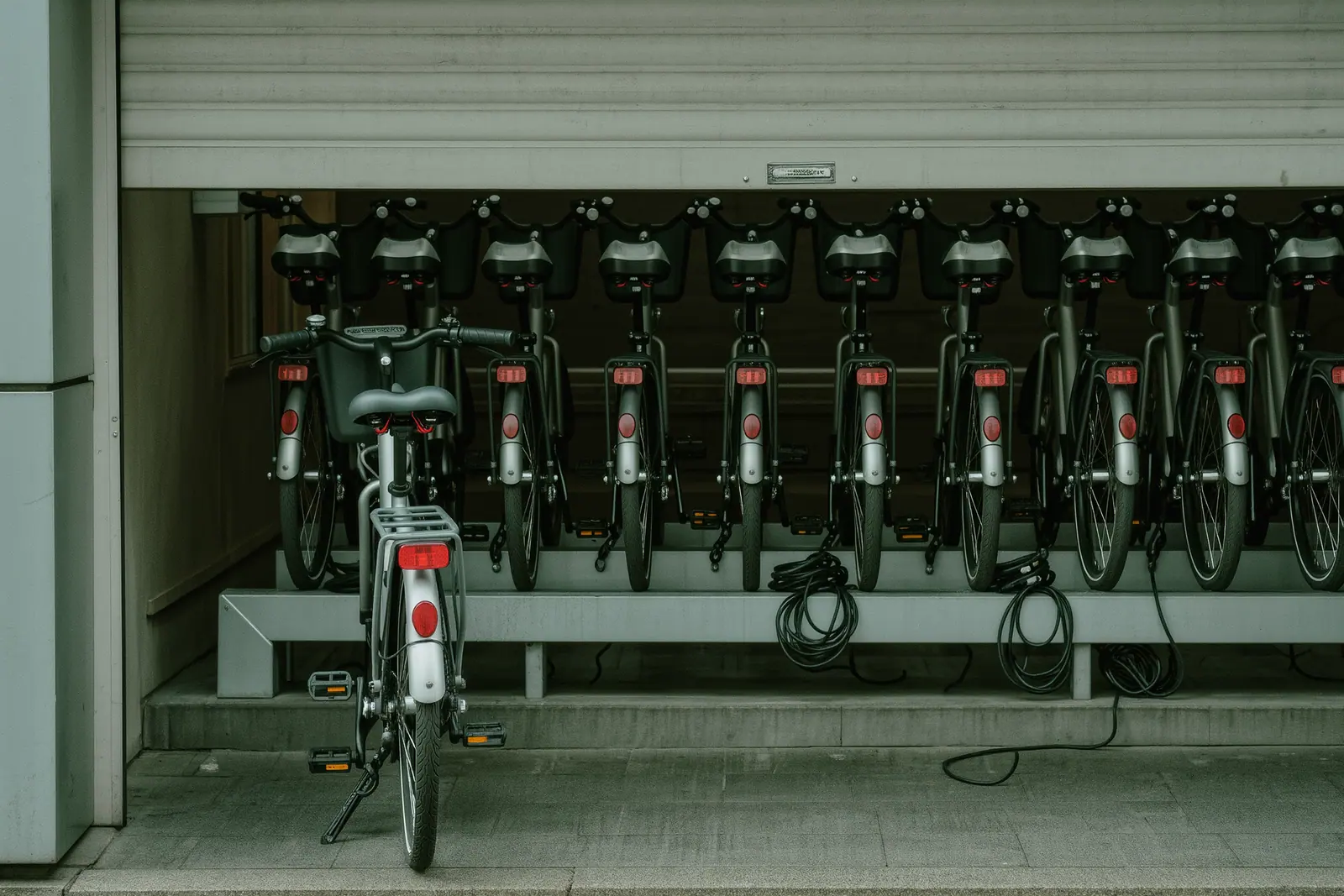
Someone landing in Munich for a week will be offered two ways to have a bicycle: download an app and unlock whatever is standing on the corner, or walk into a shop and hire one for the whole stay. The apps look obviously cheaper for the first two days and are frequently the wrong choice by the fourth.
The deciding factor is not price. It is where you intend to ride.
The operating zone is the whole argument
Every sharing system here works inside a defined area. It covers the city and parts of the inner suburbs generously, and then it stops. What lies outside it is exactly the riding worth doing from Munich: the river path south towards Wolfratshausen, the lakes at Starnberg and Herrsching, the moraine hills west, the whole pre-alpine strip.
Ride a shared bike out of the zone and the app will tell you, insistently, and then charge an out-of-zone fee that dwarfs the rental. You also cannot leave it there and take the train home, because the bike has to come back.
A shop bike has none of those constraints. It can go on a regional train with a bicycle ticket, it can be left overnight at a hotel, and it can do the Isar route in one direction with a train return, which is the best single day out available on two wheels here.
| Sharing app | Shop hire for the week | |
|---|---|---|
| Best for | Short hops, one-way trips, evenings | Whole days, long rides, leaving the city |
| Where it works | Inside the operating zone only | Anywhere you can ride to |
| Cost shape | Per minute, day caps, subscription tiers | Flat weekly rate, steep multi-day discount |
| Fit | One size, heavy, upright | Adjusted to you, chosen frame size |
| Carrying things | A basket at best | Rack, panniers, child seat if asked |
| On a train | No | Yes, with a bicycle ticket |
| Parking | Restricted in the historic centre | Any legal stand |
| Available at 23:00 | Usually | Only because you still have it |
| If it breaks | End the hire, find another | Call the shop, they sort it out |
Where each one actually wins
The apps win in four situations, and they win comfortably.
- One-way trips. Riding somewhere and coming back by tram or underground is the thing a hired bike cannot do.
- Late evenings. Shops close. The app does not.
- Rain that arrives halfway. Ending the hire and stepping onto a tram costs nothing.
- A day or two of light use. If you will ride three times in a week, do not hire a bike for seven days.
Shop hire wins the rest, and it wins on the days that matter. A whole day along the river. A ride out to a lake with the train home. A family outing with children who need bikes that actually fit them. Anything with luggage on a rack. The weekly rate at a shop is normally a long way below seven times the daily rate, which is what makes this comparison closer than the app pricing suggests.

The parking rules people trip over
Free-floating parking in the historic core is restricted, and returns in that area have to be made at designated spots. The city tightened the rules for shared bicycles and, more visibly, for shared scooters, after several years of machines being abandoned across pavements and outside station entrances.
Practically this means one thing: do not plan to end a shared hire outside a restaurant in the old town. Check the app map, find the nearest permitted spot, and walk the last two minutes. It is a small annoyance that becomes a large one late in the evening when the app will not let you close the hire and the meter is still running.
A hired shop bike is subject to ordinary rules and can be locked to any legitimate stand, which is simpler. The trade-off is that you are then responsible for it, including in the districts where theft is highest — the detail is in city bike hire and the cycle network.

The two crowded fortnights
During the autumn festival, shared bikes near the main station and the festival ground are hunted by thousands of people at once, and the ones left standing are the ones nobody wanted. Availability in the outer districts collapses too, because everything has been ridden inwards and the redistribution vans cannot keep up. A shop bike, booked ahead, sidesteps all of that, and it is one of the very few things in Munich that does not get more expensive in those two weeks.
The winter school holidays affect city cycling much less, but they change what you want from the bike: studded tyres, full mudguards and good lights matter far more than gears, and no sharing fleet is equipped for ice. That is a separate decision, made in winter bike hire and the cleared routes.
Two things that are easy to get wrong
The first is assuming the app covers the whole urban area. Coverage thins fast in the outer districts, and a bike you rode out to a suburb at eleven in the morning may be the only one within a kilometre when you want to come back.
The second is treating the day cap as the price. Day caps usually apply to a rolling period rather than a calendar day, and several systems cap only the base tariff while charging separately for the faster e-bikes in the fleet. Read the tariff page once, properly, before you commit to a week of it.
The rule of thumb: fewer than four rides in the week, use the app. More than four, or one of them leaves the city, hire from a shop and keep it for the whole stay. If you cannot predict which, do both — a week from a shop for the real riding, and an app on the phone for the evening you find yourself on the wrong side of the river with tired legs.
What to check before you book
- Look at the operating area on the app map before you rely on it. The zone stops well short of the lakes and most of the river route south.
- Find out what the out-of-zone charge is, because ending a hire outside the area is the single most expensive mistake on these systems.
- Check the parking rules for the historic centre, where free-floating returns are restricted and you must use a designated spot.
- For shop hire, confirm the weekly rate rather than multiplying the daily one. Multi-day pricing drops steeply.
- Ask the shop what happens if you keep the bike past closing time on the last day.
- If a train is in your plan, remember shared bikes cannot travel with you and hire bikes usually can, with a bicycle ticket.
Questions people actually ask
- Are the sharing apps cheaper than a bike shop for a week?
Only if your riding is short hops inside the inner districts. Sharing systems charge by the minute with day caps or subscription tiers, so a week of casual use adds up quickly, while a week of shop hire usually costs little more than three or four days at the daily rate. Add one long ride out of the city and the shop wins outright.
- Can I take a shared bike to the lakes or along the Isar?
Not sensibly. Operating areas cover the city and some of the inner suburbs, and both the lakes and the interesting part of the river route lie outside them. Ending a hire outside the zone triggers a substantial charge, and in practice you also cannot rely on finding a bike for the journey back.
- What are the parking rules for shared bikes in the centre?
The historic core restricts free-floating parking, and returns there have to be made at designated spots rather than wherever you happen to stop. Rules for shared bicycles and for shared scooters have both been tightened in recent years and are enforced. Check the current zones in the app before you plan to leave a bike outside a restaurant in the old town.
- How different is the bike itself?
Sharing bikes are built to survive rather than to fit you: one frame size, a heavy step-through design, three gears or a motor, no rack and no way to carry a child. A shop bike is adjusted to your leg length, has a stand and a rack, and is a considerably nicer thing to sit on for four hours.