GearMünchen
The binding release setting, and who is allowed to touch it
Dec–Mar
Every hire shop asks the same four questions before it hands over skis, and most people answer one of them wrongly. What a release setting is, how the trade arrives at the number, why a screwdriver in a car park is a bad idea, and what to check on the paperwork before you leave a Munich shop for the mountains.
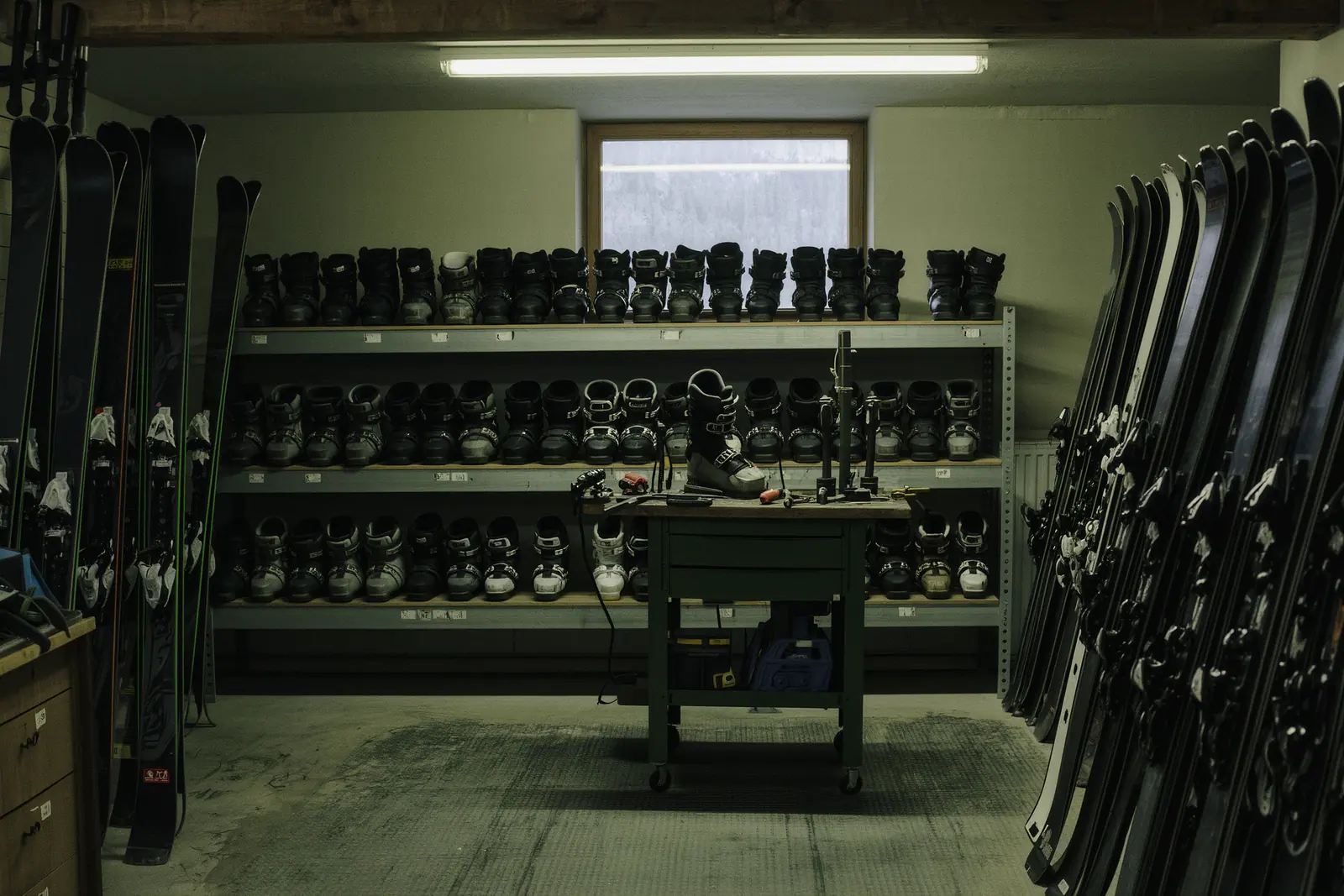
The counter conversation before you get skis is always the same. Height, weight, age, how do you ski. It takes ninety seconds, it feels like paperwork, and it is the part of the hire that has actual consequences on a hard, cold January piste above the Isar valley.
Those answers produce a single number, set into the toe and heel of the binding, that governs how much force is needed before the boot is let go. Most people give at least one of the four inaccurately, and the one they get wrong is usually the last one.
What the number is
A ski binding is a release mechanism. It holds the boot until a load arrives that is more likely to hurt you than to be part of skiing, and then it opens — sideways at the toe for a twist, upwards at the heel for a forward fall.
Where that threshold sits is expressed as a release value on a scale the whole trade uses. Beginners and light skiers sit low, heavy and fast skiers sit high. It is not a skill rating and there is no advantage in a big number. A binding set too high will hold onto your boot through a fall it should have released; set too low, it dumps you on a firm traverse for no reason.
The calculation itself is not folk knowledge. It comes from a published standard the industry works to, and any shop renting skis in Munich will have the chart or the software on the bench. What varies is the care with which the inputs are gathered.
The four inputs, and the one everybody fudges
| Input | Why it moves the number | Common error |
|---|---|---|
| Weight | Does most of the work; the scale is built around it | An estimate several kilos light |
| Height | Adjusts the weight band up or down | Rounded up, in outdoor clothing |
| Age | Reduced at the young end and again in later years | Left out entirely |
| Boot sole length | Converts the value into torque at the boot | Copied from last year’s boot |
| Skier type | Shifts the result by a step in each direction | Chosen for flattery |
Weight in kilograms, honestly, including nothing. Height without the boots on. Age as it is. And then the skier-type question, which sounds like a personality test and is not: it asks where you ski and how hard, and the middle answer covers the large majority of people who ski a dozen days a winter on marked runs. Selecting the top category because “cautious” sounds unflattering raises the force required to release you, on the same legs.
Two things are worth volunteering that the form does not ask. A previous knee reconstruction or a recent leg fracture is relevant, and many technicians will set slightly lower for it. So is a long gap since you last skied.
Why the boot is part of the binding
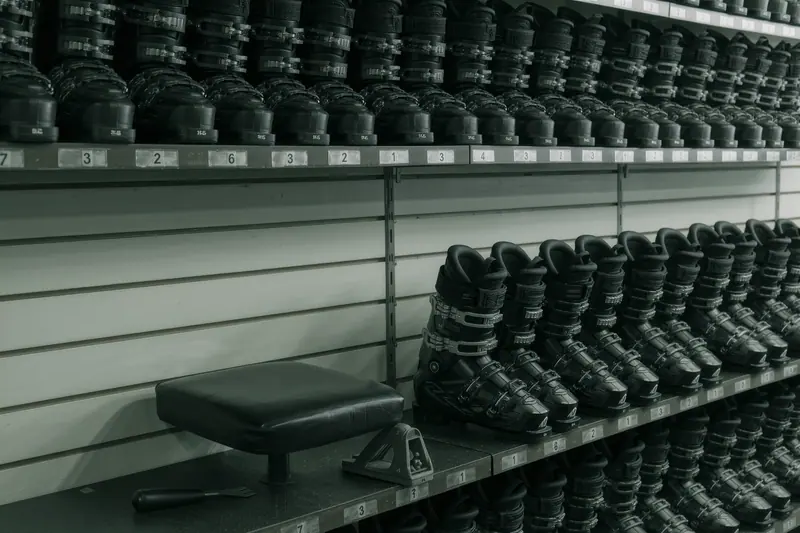
The release value is a force at the boot, and the boot is a lever. A longer sole produces a different torque for the same twist, so the technician needs the sole length in millimetres — a number moulded into the heel of every alpine boot — to translate the calculated value into an actual setting.
This is the practical reason to sort out the boot fitting before anything else, and the reason a mid-week boot swap has to go back through the bench rather than being handed over at the door. If you change boots and keep the skis, the binding is no longer set for you.
It is also why bringing your own boots to a ski-only hire is fine, provided you hand them over rather than describing them. The shop needs to measure the sole, check the toe and heel for wear, and confirm the boot sits correctly in that binding. Worn sole pads are a genuine cause of unexpected release, and they are invisible unless somebody looks.
What to check before you walk out
- The indicator windows. Toe and heel each show a figure. Look at them. They should agree with each other and with your paperwork.
- The contract. Your height, weight, age, skier type and boot sole length should be written down. A shop that records nothing has calculated nothing.
- The step-in. Click into both skis in the shop, on the floor, and step out again by pressing the heel lever. If anything is stiff or reluctant, say so.
- The brakes. They should snap flat when you click in and spring down when you release. A brake that catches is an annoyance on the piste and a runaway ski in the car park.
- The bench test, if offered. Better shops run bindings across a test device that measures the actual release torque rather than trusting the dial. It is not universal and it is worth asking about.
Then leave it alone. A hire binding is set, recorded and, in principle, verifiable; adjusting it yourself moves it outside both the standard and the agreement you signed. If something behaves oddly on the first run, the answer is a phone call to the shop, not a multi-tool.
The honest limit of all this
A correctly set binding reduces the chance of certain injuries. It does not prevent them. The mechanism is designed around twisting and forward loads at the lower leg, which is why it has done a great deal for broken tibias over the decades and much less for knee ligaments, where the loads arrive from directions a binding is not built to read.
None of that is a reason to skip the ninety seconds at the counter. It is a reason to treat the number as one part of a day rather than a guarantee, along with the boots, the state of the piste and how tired you are at four o’clock on the last run.
If your winter runs beyond the marked pistes, the equipment conversation changes shape entirely — different bindings, different failure modes, and a training requirement attached. Start with the touring and piste comparison and the avalanche kit piece before you hire anything with a walk mode.
What to check before you book
- Give your real weight in kilograms and your real age. Both move the number, and both are routinely fudged at the counter.
- Answer the skier-type question honestly. Choosing the aggressive setting because it sounds better raises the force needed to release you.
- Check that the boot sole length written on the contract matches the number stamped on the heel of the boot you were given.
- Look at the indicator windows on toe and heel before you leave and note the figures. They should match what is on your paperwork.
- Tell the shop if you have had a knee reconstruction, a recent leg fracture or are returning from injury. Some technicians adjust downwards for it.
- If you swap skis or boots mid-hire, take them back to the bench. A new boot means the binding has to be set again.
- Never adjust the screws yourself, and do not let a friend do it in the car park. A binding altered outside the shop is also outside the hire agreement.
Questions people actually ask
- What does the number in the binding window mean?
It is a release value on an industry scale, and it corresponds to the twisting and forward force at which the binding is designed to let the boot go. It is not a difficulty rating and a higher number is not better. It is calculated from your body and your boot, then set on a bench and, in a properly equipped shop, verified on a test device.
- Which four things decide my setting?
Your height, your weight, your age and your boot sole length, combined with a skier-type answer that describes how and where you ski. Weight does most of the work, height adjusts it, age moves it down at both ends of the range, and the sole length converts the result into the correct torque at the boot. Change any one of them and the number changes.
- Can I set my own bindings?
You should not, and with rental equipment you must not. The calculation follows a standard the trade works to, and the resulting setting is meant to be applied and checked on a calibrated device rather than by eye. Beyond the safety argument, a hire binding that has been adjusted by the customer is a straightforward breach of the rental agreement.
- Should I ask for a higher setting so I do not pre-release?
Almost never, and not by describing yourself as a more aggressive skier than you are. Genuine pre-release is usually a symptom of something else — a worn boot sole, ice packed under the toe, a mismatch between boot and binding — and the fix is at the bench, not on the dial. Tell the shop what happened and let them look at it.
- Do the rules differ for children?
Children sit at the bottom of the scale, where small errors matter proportionally more, and their settings are usually derived with extra care and rechecked. Bring the child to the shop rather than collecting kit on their behalf from a guess at their weight, and take the boots back if they have grown between one winter and the next.