GearMünchen
Rental ski boots: the fifteen minutes that decide the day
Dec–Mar
Everything else in a ski hire can be average and the day still works. Boots cannot. What happens in a proper rental fitting, the two measurements that matter, why the flex number on the cuff is not a size, and how to get it done well in a Munich shop before a Saturday in the mountains.
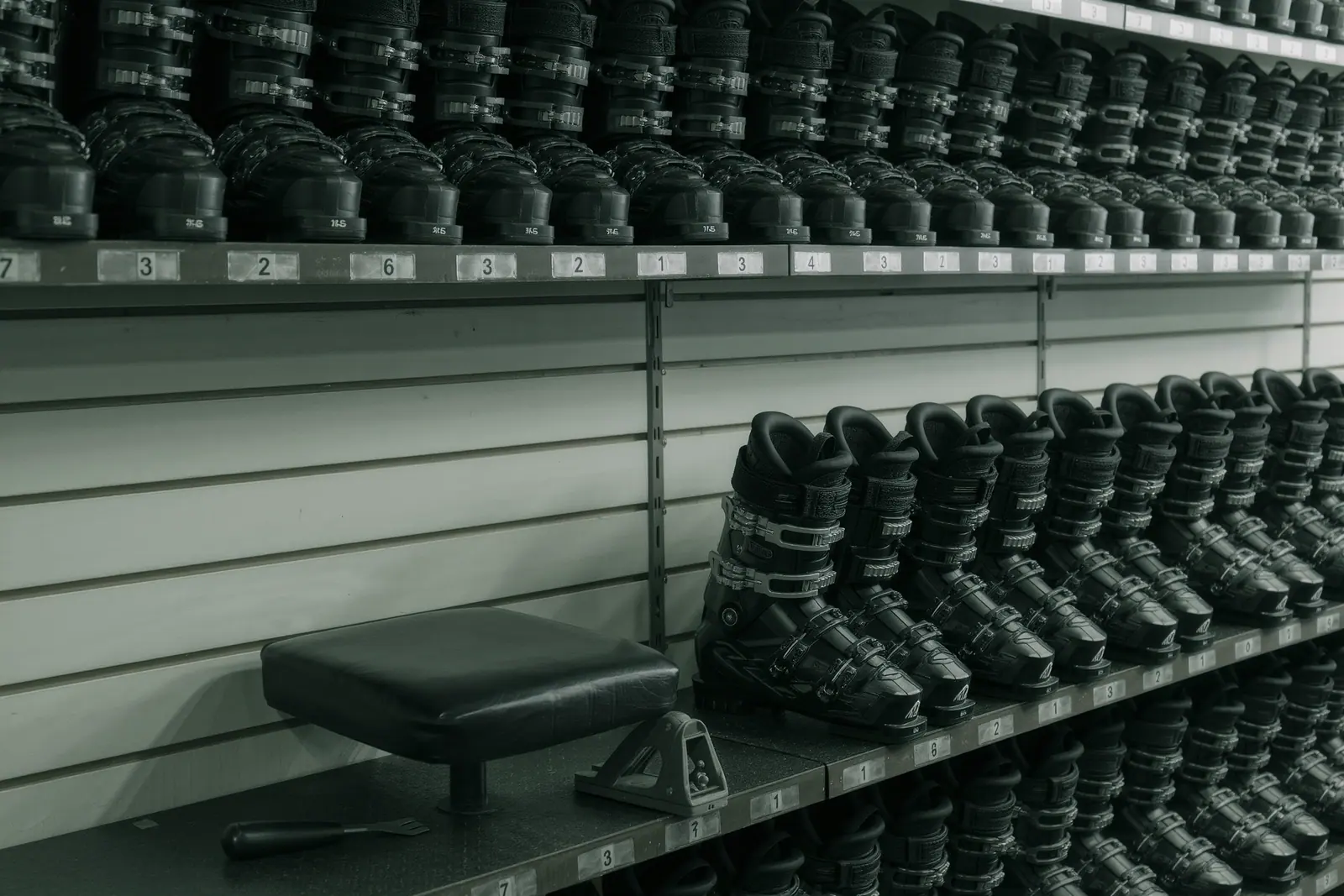
A hired ski costs you a bit of edge grip. A hired boot that does not fit costs you the afternoon, and sometimes the trip. It is the one part of a winter rental where the difference between a careful shop and a fast one shows up in the first hour on the hill, and it is the first thing a Saturday queue in a Munich basement takes away from you.
The fitting is fifteen to thirty minutes done properly. Booking it for a Wednesday evening rather than an eight o’clock Saturday scramble is most of the work.
What a proper rental fitting actually does
The sequence in a shop that knows what it is doing:
- Measure the foot standing, both feet, length and width. Not a shoe size read off a phone.
- Shell check. Liner out, foot into the bare shell, toes touching the front. The fitter puts fingers behind the heel. One to two fingers of space is roughly a comfortable fit; more than that and the shell is too long.
- Liner back in, boot on, buckled from the toe up. Not cranked. The two lower buckles hold the foot, the top buckle and the strap hold the cuff.
- Flex forward. The heel should stay down. If it lifts, the boot is wrong whatever the length says.
- Ten minutes of walking, in the shop, with the buckles done as you would ski them.
- Boot sole length recorded — the number in millimetres stamped on the heel, which goes on the paperwork and into the binding.
If the counter skips straight from a shoe size to a box on a shelf, you have been sized rather than fitted. On a quiet evening it is reasonable to ask for the shell check; in the last week of February with twenty people behind you, it is not going to happen.
The two measurements that matter, and the one that does not
Length is obvious. Width is not, and it is the reason a boot that measures correctly can still ruin a day. Rental ranges are built around a medium to wide last because that fits the most people with the fewest complaints, which means a narrow foot slides around inside and a genuinely wide foot gets pinched at the joint below the big toe.
Say which you have. A shop with any depth of stock keeps a narrower model and a wider one behind the standard rack, and they will only bring it out if asked.

The number that does not matter as much as people think is flex. It is printed large on the cuff, it is not standardised across brands, and in a rental fleet it mostly correlates with how old the boot is. A moderate flex suits nearly everyone on Bavarian piste for a day. Chasing a stiff boot because it sounds serious gets you cold feet and a sore shin.
Socks, and the other small things
| Thing | The usual mistake | What to do instead |
|---|---|---|
| Socks | Thick, or two pairs | One thin pair, no seam across the toes |
| Trousers | Tucked into the boot | Over the outside of the cuff |
| Buckles | All four cranked tight | Lower two firm, upper two moderate |
| Warm-up | Cold boots straight on | Ten minutes indoors before you leave |
| Removing | Left buckled in the car | Undone the moment you stop skiing |
Thick socks are the single most common error. They compress, they hold damp, and they make a boot feel padded in a warm shop at a size that is genuinely too big. Thin socks, one pair, drawn smooth over the shin.
The other habit worth having in this city: winter mornings here run cold and the boots sit in a car boot overnight if you collect the evening before. A frozen liner takes half an hour to become tolerable. Carry them inside.
Rental boots and multi-day hires
For a single day, you take what fits and you live with it. For a week in the mountains it is worth treating the boot as the thing you are actually renting.
Two options are worth paying for. A heat-moulded liner, where the shop bakes the liner and you stand in it while it cools, is often a modest add-on and makes an average boot noticeably better around the heel and ankle. A basic footbed does something similar from underneath, and matters most for high arches and flat feet.
Both need time and neither can be done at the counter as you leave, which is one more reason for a weekday evening. If the shop offers same-day moulding, allow an hour.
And if a multi-day boot hurts on day one, take it back that evening. Shops swap boots inside a rental period as a matter of course, and skiing three more days on a boot that pinches is a choice nobody needs to make. The day-trip logistics piece covers the collection and return windows that make an evening swap possible in the first place.
Why this feeds straight into the binding
The boot sole length in millimetres, stamped on the heel of the boot you are given, is one of the inputs a technician uses to set the binding. Change the boot and the setting changes. That is not a formality — a binding set for a different sole length is a binding that has not been set for you at all.
So: get the boot right first, then let the shop do the binding, and check that the sole length on the paperwork matches the number on the boot in your hand. The release setting is worth understanding for exactly this reason. If your day involves a walk mode and a different sort of boot entirely, the touring comparison is the relevant one.
The advice most people ignore, offered plainly: turn up an evening early, in the socks you will ski in, and be a slight nuisance about the shell check. Fitters would rather spend fifteen minutes on you on a Wednesday than deal with a returned boot on Saturday afternoon.
What to check before you book
- Book the fitting for a weekday evening rather than a Saturday morning. The fitting is the first thing a queue takes away from you.
- Bring the socks you will ski in — thin ones, one pair. Thick socks make a boot feel good in the shop and cold on the mountain.
- Stand up in the shell with the liner out if the fitter offers it, and check the gap behind your heel with your toes at the front.
- Walk in the buckled boots for ten minutes on the shop floor before you accept them. Pain that appears at minute eight will be there all day.
- Ask for the boot sole length in millimetres, which is stamped on the heel, and check it is written on the rental contract with the binding setting.
- If the shop offers a heat-moulded liner or a footbed as an add-on, ask how long it needs. Same-day moulding needs an hour before you leave, not five minutes.
Questions people actually ask
- What size rental ski boot should I ask for?
Give your foot length in centimetres rather than a street shoe size, and let the fitter check the shell. Rental boots are sized in the same scale as ski boots generally, and a foot measured at 27.5 centimetres does not reliably map to any particular shoe size. The fitter should measure the foot standing, on both feet, because most people have one longer than the other.
- Should rental boots feel tight?
Snug, not painful, and shorter than a walking shoe. Toes should brush the front when you stand upright and pull back when you flex forward into the ski position. A boot that feels comfortable standing still in the shop is usually too big, and it will be loose, cold and unresponsive after an hour on snow.
- What is the flex number on the side of the boot?
It is a rough stiffness index, not a size, and it is not standardised between manufacturers. Softer boots are more forgiving and warmer for beginners and lighter skiers; stiffer ones transmit more to the ski and punish poor technique. For a hire day on Bavarian pistes, a moderate flex is right for almost everyone, and anyone who genuinely needs a stiff boot already knows their number.
- Can rental boots be adjusted if they hurt?
Some can. Many shops will move a buckle, add or remove a shim, or heat-mould a liner, and a few will punch a shell to relieve a specific pressure point. Ask before you leave rather than after your first run, and go back the same evening if a multi-day rental is uncomfortable — most shops will change the boot at no cost within the hire period.