Two wheelsMünchen
Mountain bike rental in Munich for the foothills
May–Oct
The foothills start an hour south of Munich and give you eight hundred metres of climbing on forestry road before anything interesting happens, which shapes what you should rent. Where to go, how to get there without a car, and the access etiquette that keeps these trails open.
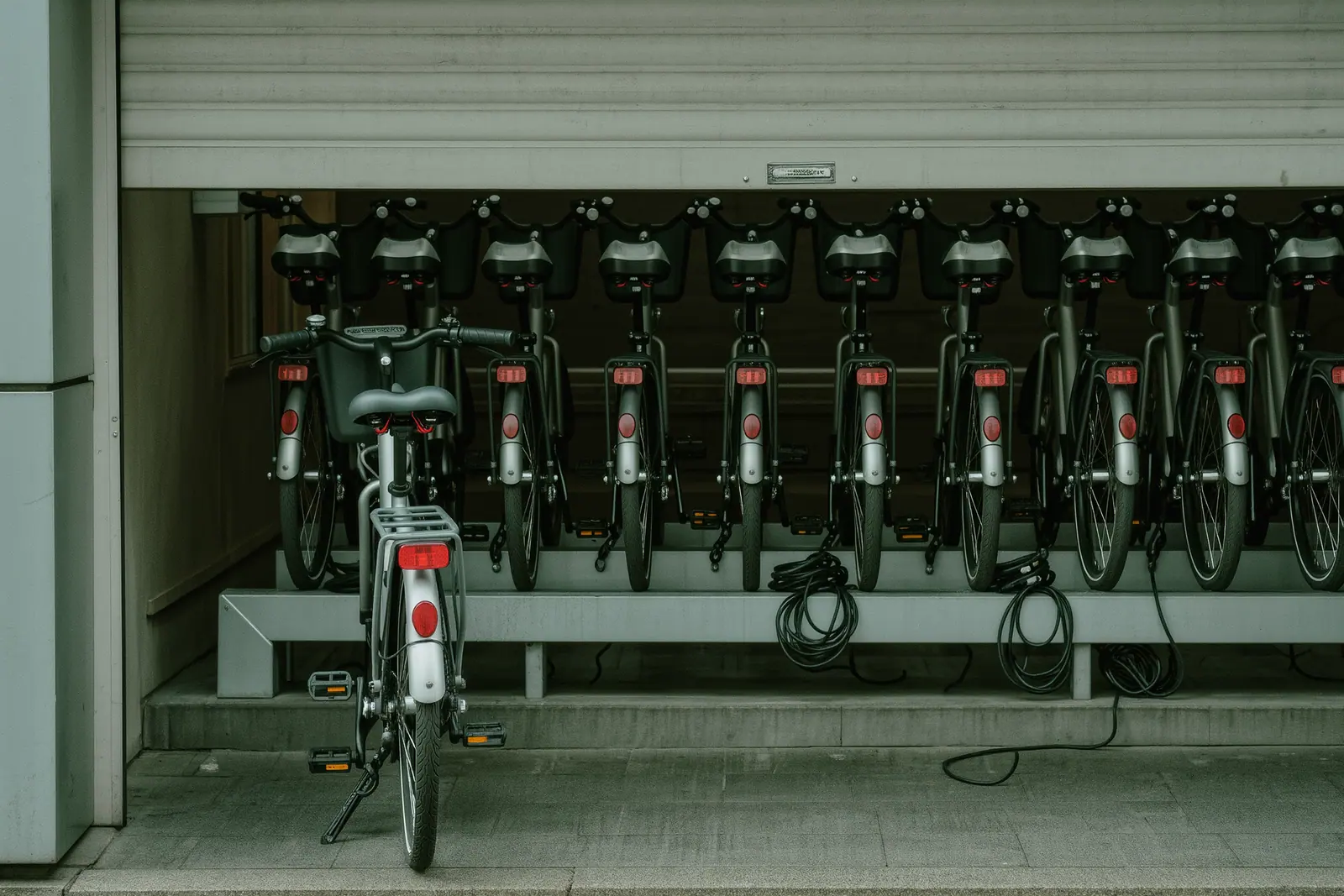
An hour south of Munich the land stops being flat. Not dramatically — the first proper summits are only fifteen hundred to eighteen hundred metres — but the transition is abrupt enough that you can leave a shop in the city in the morning and be a thousand metres above a lake by lunchtime.
That geography sets the shape of every ride here, and it should set what you rent. These are not lift-served hills. Almost every good descent starts with a long, steady, unremarkable climb on a forestry road.
The areas, and how you reach them
| Area | Rail access from the city | Typical climb | Character |
|---|---|---|---|
| Isarwinkel, around Bad Tölz and Lenggries | Direct regional line | 600–900 m | Broad forestry roads, long views, good for a first day |
| Tegernsee hills | Direct line to the lake | 700–900 m | Steeper, busier at weekends, several classic summits |
| Schliersee and the Spitzingsee basin | Direct line | 800–1,100 m | The most alpine feel within an hour, exposed higher up |
| Bayrischzell and the Sudelfeld side | Branch line, longer journey | 700–1,000 m | Quieter, rougher surfaces |
| Kochel and the Walchensee ridges | Direct line to the lake | 900–1,200 m | Hardest climbs, best views, thin trail options |
| The Ammersee ridge and the moraine hills | Suburban network | 150–300 m | Gentle, wooded, good in bad weather |
Getting to any of them starts with the same twenty flat kilometres out of the city that the Isar e-bike route uses, which is why most people put the bike on a train rather than riding the approach.
That last row matters more than it looks. When the mountains are under cloud or the forecast has storms in it, the moraine hills west of the city give you rolling, wooded, entirely rideable ground at a fraction of the effort, and they are on the suburban network rather than the regional one.
What to rent for this ground
Three sensible answers, depending on the day.
A trail hardtail is enough for the forestry-road climbs and the wider descents, it is light, and it is the cheapest thing in the fleet. It becomes unpleasant on the rooty, rock-stepped sections lower down in the woods.
A full-suspension trail bike of roughly 130 to 150 millimetres is the default for a reason. It climbs fire roads perfectly well and it handles the descents without punishing you.
An e-mountain bike changes the day rather than the ride. A nine-hundred-metre climb becomes forty minutes rather than eighty, which means two or three descents instead of one. Ask for the battery capacity in watt hours; on this terrain a small battery and a heavy rider will not do two big climbs.
Whatever you take, look at the brakes and the tyre edges before you sign. Rental mountain bikes here spend their lives descending, and pads and side knobs are the components that go.
Access, which is a genuine local subject
Bavaria has a broad, constitutionally grounded right of access to open country, and cycling on suitable paths falls within it. That sounds generous and it is, but “suitable” is not a defined list, and forestry operations, private tracks, protected areas and seasonal wildlife closures all sit on top of it. There have been long-running arguments here about narrow hiking paths, and several municipalities have signed restrictions in response.
Two things follow for anyone renting a bike for a day.
First, do not take a legal position from an article, including this one. Ask the rental shop what is currently open and closed in the area you are heading to; they deal with it weekly and they will know about the closure that went up last month.
Second, the etiquette is the access. Give way to walkers without being asked, slow to walking pace when you pass, and do not ride marked closures. The trails that are open here are open partly because enough people behave, and a rented bike with a visitor on it is exactly the thing that gets photographed.
The season, honestly
May is the earliest sensible month, and even then the higher traverses hold snow in the shaded gullies and the ground is soft. June and September are the two best months: long light, firm ground, and far fewer people than July and August, when every good summit within an hour of Munich carries a stream of walkers on a fine Saturday.
Afternoon thunderstorms are the summer constant. They build over the main range and drift north, and being on an exposed ridge at four in the afternoon in July is a bad plan. Start early, be off the top by two, and take the descent slowly because the ground goes greasy in minutes.
October gives you the clearest air of the year, cold mornings, and the first closures. By November the higher ground is finished and the riding moves back down to the moraine hills and the river, which is where winter cycling and what to rent picks up.
The mistake to avoid
Booking a bike for a Saturday and a car to get to it. The good valley car parks here fill by nine on a summer weekend, the approach roads queue, and you spend the first two hours of the day in traffic in order to ride a trail that is also full. Take the first train instead, ride from the station, and accept the extra twenty minutes of valley road at each end. It is a better day and it costs less than the parking argument.
What to check before you book
- Ask what travel the bike has and what tyres are fitted. A 100 mm cross-country bike and a 150 mm trail bike suit completely different days here.
- Confirm whether a helmet, pedals of your system and a repair kit are included, and whether the kit has ever been opened.
- Check the brake pads and the tyre edges before you leave. Rental bikes in this region descend a great deal.
- Ask whether the bike may be carried on a train or a car rack, and what the contract says about damage in transit.
- On an e-mountain bike, ask for the capacity in watt hours and whether a spare battery can be hired.
- Ask the shop which areas currently have seasonal wildlife closures, because they change and they are enforced.
Questions people actually ask
- Are the foothills near Munich good for mountain biking?
Very, provided you accept the shape of the day. Almost every ride is a long forestry-road climb of six hundred to a thousand metres followed by a descent, rather than the flowing lift-served riding of a bike park. The rewards are big views over the lakes, genuinely quiet weekday trails, and a network dense enough that you could ride here for years.
- Do I need an e-mountain bike?
Not if you are fit and have a whole day. The motor changes the maths for everyone else: a nine-hundred-metre fire-road climb takes most people well over an hour, and a motor turns one descent into three. Rental fleets here have shifted heavily towards motors for exactly that reason, and the day out becomes a lot more forgiving.
- Can I get to the trails without a car?
Yes, and it is one of the better things about riding here. Regional trains reach several valleys directly, with bike carriage available outside weekday peaks and with its own ticket. The trains fill on summer weekends, so book the earliest service you can face and be at the platform in good time.
- Where am I allowed to ride?
Bavaria grants a broad right of access to open country for cycling on suitable paths, but what counts as suitable is not a fixed list, and forestry, wildlife and local restrictions apply on top. Narrow hiking paths and marked closures are where conflict happens. Ask the rental shop what is currently open and treat any sign or barrier as binding.